
The Ad Hoc Gist: How Urbint’s $325M Exit Proved Many VCs Wrong
Itron recently announced its $325 million acquisition of Urbint, marking a significant exit in the climate resilience software space. The deal comes at an interesting time. Climate tech M&A exits are down 25% year over year, yet acquisitions now represent 92% of all exits in the sector.
We sat down with Urbint founder and CEO, Corey Capasso, one of AHG’s first clients, to discuss what this exit signals for founders selling to utilities and how the utility market has transformed from a graveyard for startups into fertile ground.
In AHG news, we’ve added a number of great new speakers to the Power Resilience Forum. Check out the updated agenda here.
And, we’re hiring again at AHG! We have open roles for a senior associate and two associate positions.
If someone forwarded you this email, you can subscribe here!
Best,
Jim
How Urbint's $325M exit proved many VCs wrong
Q: The utility market has historically been where startups go to die. Has that changed?
Capasso: In 2017, there was a common phrase in Silicon Valley: "Death by Utilities." General tech investors wouldn't touch us. The perception was you'd burn through all your capital waiting out long sales cycles.
But the capital ecosystem has transformed. What's changed isn't just investor appetite, but utility urgency. They're facing existential threats they can't ignore. There are also now dedicated venture and growth funds, and some generalist investors have gotten more sophisticated in the space because these problems have massive societal impact. Aging infrastructure, plus extreme weather, has accelerated the rate at which utilities need to adopt technology.
Q: With 92% of climate tech exits now being acquisitions, how should founders think about exit strategy?
Capasso: Focus on creating value. Businesses get bought, not sold. If you generate significant value, you'll naturally create more options for an exit.
IPOs require certain preparations and market conditions. You need predictable revenue, strong unit economics, and the right macro environment. On the other hand, strategic acquisitions can be opportunistic and are driven by market demand and capital availability.
For infrastructure software specifically, given the highly verticalized nature of the industry, if you build something valuable, strategic buyers can't ignore you.
Q: Urbint started as a multisector AI company. What made you laser-focus on utilities?
Capasso: Our initial idea in 2015 was combining real-world data and AI to predict risk across real estate, then government, and then any industry that touched infrastructure.
We were solving interesting problems, but not existential ones. Then, an "aha moment" came in 2017 during a meeting with Con Edison. We walked in thinking we'd talk about real estate solutions, but they started describing their challenges with aging infrastructure and operational risk. We realized we could apply our technology to predict and prevent catastrophic failures.
However, even if you can predict something, if the utility can’t act on it, the prediction is worthless. That insight pushed us to build operational workflows around our models so utilities could turn predictions into action — preventing incidents, not just forecasting them.
Q: Many founders avoid utilities because of 18- to 24-month sales cycles. What's your survival guide?
Capasso: First, solve problems that reach the C-suite and board — safety, catastrophic failure, major outages. If it’s not existential, you won’t survive long cycles. The problem has to be big enough that they can't ignore it.
Second, provide fast time to value with quantifiable, operational impact. We onboarded our first utility client within one month. How? We used KPIs the utility already accepted. We didn't ask them to learn a new scorecard.
Third, design your operating model to withstand unpredictable, lumpy revenue. You need patient capital and a war chest. Plan for long sales cycles in your financial model. If deals close faster, great, but don't count on it.
Finally, build a consultative, utility-specific sales playbook. Utilities are incredibly domain-specific. What works for selling to a gas utility in New York may not work for an electric utility in Texas. Generic enterprise tactics won't cut it.
Q: How do startups overcome utilities' preference for established vendors?
Capasso: Sell with conviction, not persuasion. You’re not pushing software: you’re solving a problem with fast time to value and measurable impact. When you truly understand their pain and can show immediate value, being a startup matters less.
You also need to know your customer deeply. Utilities are operationally complex and highly regulated — assets above and below ground, thousands of field workers, and Mother Nature at play. If you don't understand the difference between transmission and distribution, how rate cases work, or what drives their regulatory compliance, you can't solve their problems effectively.
The depth of domain expertise required is why many startups fail in this market. You can't fake it.
Q: Resilience has become a hot investment category. Is it hype or a fundamental shift?
Capasso: Resilience is existentially imperative for utilities. It's not just about technology: it’s services, processes, and people. We're seeing increased demand for resilience-based solutions, but there aren't enough companies that can provide them at scale.
With extreme-weather disasters now costing the U.S. nearly $150 billion annually, resilience is no longer optional. Every board meeting and every earnings call now includes discussion of storm response and grid hardening. That urgency is creating growth and unlocking capital. There is strong demand, but the emphasis has to be on adoption.
Q: You've been using AI since 2015, before the current hype. How has the boom affected utility software?
Capasso: We actually avoided using the term "AI" for years because of skepticism. We didn’t care about marketing the “how,” we always put the focus on operational impact. Now everyone wants AI solutions, but it hasn't changed the fundamentals.
The hype has created noise, but hasn't changed what utilities actually need. My advice to utilities is to view AI as one capability among many. Prioritize technologies that provide the biggest impact on safety, affordability and reliability — whether that's AI or not. Don't buy AI for AI's sake.
Q: Looking back, what enabled Urbint to succeed where others failed?
Capasso: The key was understanding utilities aren't just slow-moving bureaucracies. They're complex organizations managing critical infrastructure under enormous pressure. We succeeded by adapting for that complexity while providing innovation. Too many startups either try forcing utilities to move at Silicon Valley speed or give up entirely. Winners find the middle path: patient capital, deep domain expertise, and solutions to existential problems.
Q: What’s next for you after this milestone?
Capasso: My focus will continue to be scaling Urbint’s impact, but on the personal front, I became a father earlier this year and that has given me a new sense of empathy and purpose. It has reminded me why I'm building technology that helps keep people safe. I'm grateful to everyone who's helped me along the way and I hope to keep giving back to an industry that's given me so much.
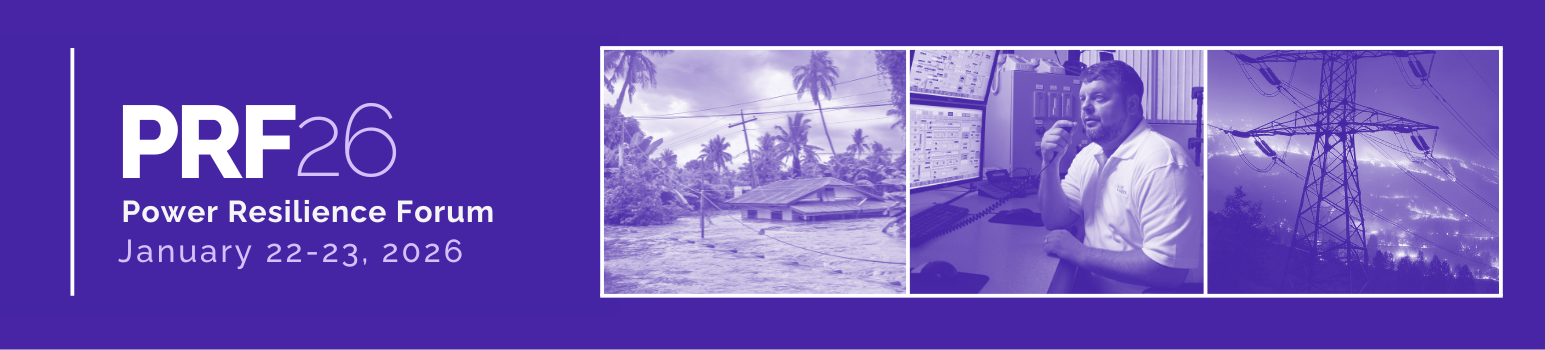
Registration is open for the 2026 Power Resilience Forum! From January 21-23, PRF will convene experts at the intersection of the power sector and resilience solutions to tackle grid resilience in an era of extreme weather. Register now at resilience-forum.com.
News from Our Network
-
Seneca, a wildfire-fighting drone startup, emerged from stealth with $60 million in funding to deploy autonomous drones that can carry 100 pounds of fire suppressant each and respond to fires faster than helicopters.
-
After tax credit changes forced the geothermal industry to pivot, Dandelion Energy launched a residential leasing program modeled on solar's success, offering systems for $10-40 monthly that could unlock a billion-dollar market, according to Tech Brew.
-
Nextracker will supply $75 million worth of U.S.-made steel solar frames to T1 Energy's new Dallas facility, replacing imported aluminum frames with domestic steel production.
-
Gridsight was named to LinkedIn's Top 20 Australian Startups for 2025.
-
Rhizome CEO Mishal Thadani explained how his company helps utilities analyze climate risks and prioritize grid hardening investments on the Climate Proof podcast.
-
Pano AI, Technosylva, and other wildfire response companies were featured in Forbes examining how AI and rapid deployment are combating fires that now threaten states like Minnesota, New Jersey, and Texas year-round.
-
Kraken was ranked the top digital platform for customer care and engagement in energy utilities by Frost & Sullivan, noting the platform handles more than 40% of customer communications through AI and releases new features over 200 times daily.
-
Ebb Carbon launched Project Macoma in Port Angeles, marking its most advanced ocean-based carbon removal system after two years of development.
-
The Clean Energy Leadership Institute (CELI) named Richenda Van Leeuwen, a former UN Foundation energy access leader, as executive director to guide its mission of training the next generation of clean energy professionals.
- Switched Source deployed Phase-EQ technology in Georgia with Georgia Power, showing the device can boost power line capacity by 20% and cut load imbalance in half without costly infrastructure upgrades.
Jobs in Our Network
Send us your job openings in cleantech policy, startups, and utilities, and we'll put them in next month's Gist.
Featured Role:
Interested in joining the Ad Hoc Group? We’re hiring! Apply by Nov. 10:
- Senior Associate (Remote or Washington D.C. / Chicago, IL / San Francisco, CA / New York, NY)
- Associate (Remote or Washington D.C. / Chicago, IL / San Francisco, CA / New York, NY)
All Roles:
- Octopus Energy: Energy Specialist - Customer Support (Houston, TX)
- Charm Industrial: Regulatory Policy Manager (Fort Lupton, CO / Washington, D.C. / San Francisco, CA)
- Uplight: Regional Vice President of Sales (United States)
- Distributed Sun: Interconnection & Utility Services Specialist (D.C. Metro or Remote in NY/PJM Area)
- Dandelion Energy: Director of Enterprise Sales (Denver, CO or Arlington, VA)
- Environmental Defense Fund: Senior Analyst, Clean Electricity (San Francisco, CA)
- Pano AI: Enterprise Account Executive-Utilities and Energy (Denver, CO or Remote)
- Resilient Structures: Senior Director, Product Management (Humble, TX)
- New York State Energy Research and Development Authority (NYSERDA): Senior Director, Market Development (Albany, NY)
- Front and Centered: Climate & Clean Energy Policy Lead (Washington State)
- Aypa Power: Senior Director of Government & Regulatory Affairs (United States)
- Technosylva: Senior Customer Success Manager (Remote)
- PG&E: Manager, Clean Energy Transportation Strategy and Policy (Oakland, CA)
- California ISO: Manager, Policy Development - Demand Response and Distributed Energy (Folsom, CA or Remote)
- HomeBoost: Sales Development Representative (Remote)
Find Us
-
Anjana Agarwal will be at the Red Sky Summit in San Francisco, CA on Nov. 4
-
Chandler Mesirov, Tess O'Donnell, and Matt Anderson will be at the NARUC Annual meeting in Seattle, WA from Nov. 9-12
-
Ian Rinehart and Angela Kent will be at the Large Public Power Council's Emerging Trends Task Force Meeting in Nashville, TN from Nov. 12-14