

Insights
Learn more about
The Gist
The Gist is the monthly newsletter of The Ad Hoc Group that covers everything at the intersection of climate tech and policy. Subscribe at the link here to have The Gist mailed to your inbox each month.

The Ad Hoc Gist: Carbon Removal Hits the Brakes
Carbon removal is in another difficult cycle. Investment has slowed, policy support in the U.S. has evaporated, and big buyers like Microsoft are reevaluating their commitment.
For this month’s Gist, Ad Hoc’s Max Tuttman spoke with Neil Renninger, a longtime climate-tech entrepreneur and investor to unpack the meaning of this moment. Neil co-founded Amyris and later founded Ample Carbon, which aims to convert retiring coal plants into carbon-negative power facilities, but is now pressing pause.

The Ad Hoc Gist: Google Plans to Unlock Grid Capacity. Will Regulators Let Them?
Can data centers become part of the solution to the grid constraints they’re helping create?
That’s the premise behind Google’s latest work on distributed energy resources
— from batteries and demand response to energy efficiency.
Ellen Zuckerman discusses why Google is investing in these resources, whether they can meaningfully free up grid capacity, and what regulators need to do to make these models work at scale.
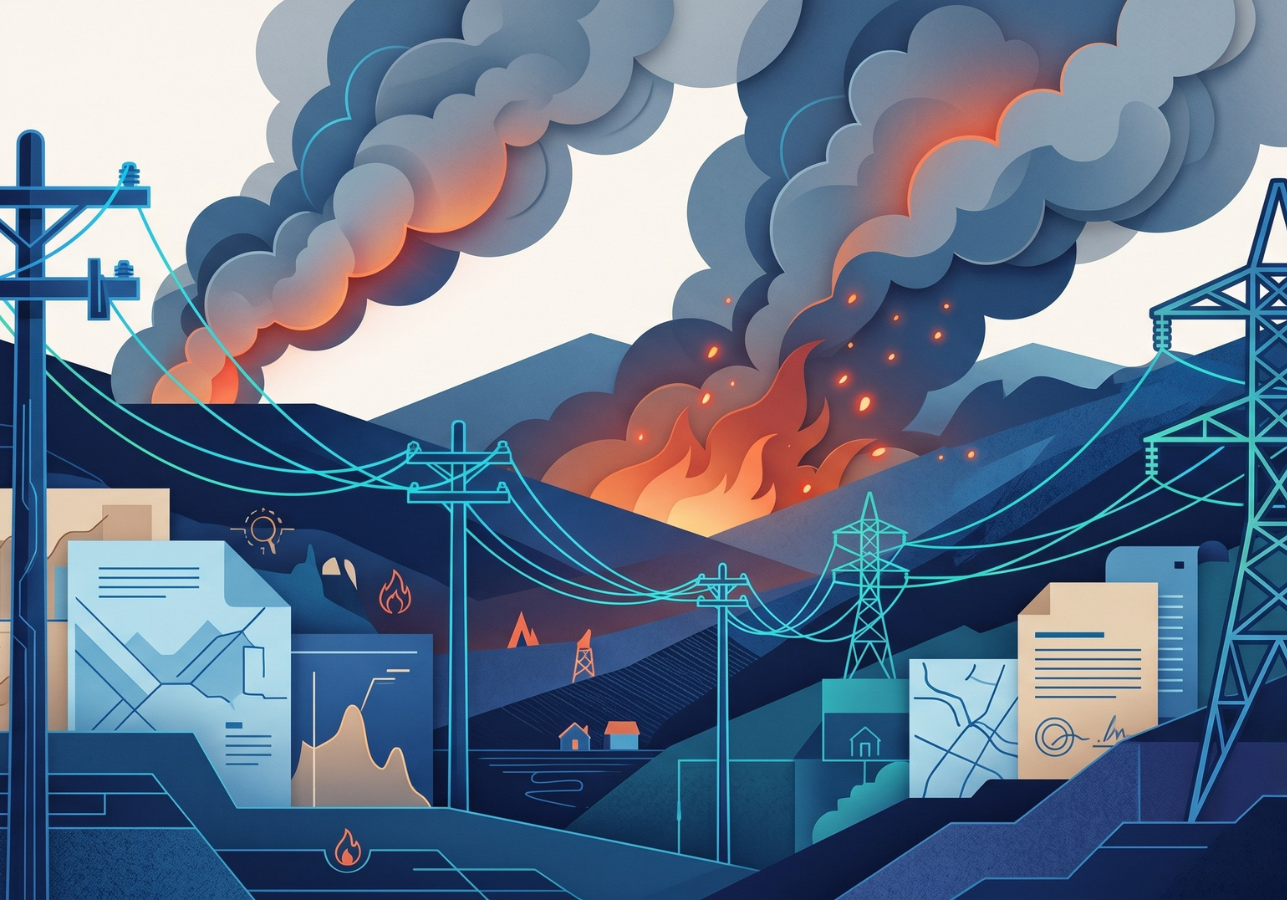
The Ad Hoc Gist: The Case for Utility Wildfire Suppression
Utilities have spent years reducing wildfire ignition risk, and much of that work has been necessary. But prevention has limits. Trees come down. Equipment fails. Lightning strikes. And when an ignition occurs, the first minutes can change the trajectory of an event.
In our latest piece, we argue that rapid suppression should be part of the utility wildfire conversation — not as a replacement for firefighters, but as part of a broader consequence-reduction strategy in the highest-risk areas. The question for regulators is no longer just: how do we prevent ignitions? But also: what is the plan for the fire that still starts?
White Papers
The Ad Hoc Group, in partnership with other industry thought leaders, publishes white papers that take a deep dive into the complex issues facing the energy industry and our clients.
Behavioral Economics and the Human Dimension of Prepaid Utility Service
In this white paper, published in August 2026, Exceleron and the Ad Hoc Group examine prepaid electric service as a mechanism for energy efficiency through the lens of behavioral economics, exploring how it can advance residential affordability and persistent energy conservation at a time of rising electricity costs.
Synthesizing evidence from established U.S. and international programs, we find that prepay implementations have been associated with persistent residential energy savings of roughly 4% to 17%, and we interpret these outcomes through five behavioral principles: customer agency, cognitive bandwidth, loss aversion, price salience, and operant conditioning. Drawing on a detailed case study of the Orlando Utilities Commission’s program, we also explore how modern prepay designs are evolving into human-centered platforms — integrating non-disconnect models, usage disaggregation, and gamification to provide customers with additional agency over their energy usage and improve their utility experience.
Ample Carbon: Lessons Learned From the Shifting U.S. BECCS Landscape from 2023-2026
Ample Carbon was founded in 2023 to convert the U.S. retiring coal fleet into a source of durable carbon dioxide removal (CDR) by retrofitting coal plants into bioenergy with carbon capture and storage (BECCS) facilities. In this white paper, published in August 2026, Ample Carbon and the Ad Hoc Group explore how market conditions have shifted over the past 2-3 years, what Ample has learned, and what the company has built along the way. We categorize the changes across four dimensions: the U.S. power utility landscape, the market for durable carbon removal, the biomass supply chain, and federal policy and funding. We also outline the technical and market progress Ample has made in identifying potential retrofit targets and derisking remaining technical challenges related to feedstock choice.

Bridging the Load Gap: A Collaborative Path for Utilities, Hyperscalers and Customers
In this white paper, published in January 2026, the Alliance to Save Energy and the Ad Hoc Group explore whether a collaborative model – one in which a large load funds incremental, utility-directed demand-side management (DSM) investments that include both demand response (DR) and energy efficiency (EE) programs – could unlock new capacity, reduce pressure on infrastructure timelines, and support improved affordability and resilience for customers.
Blog
Follow our blog for updates from The Ad Hoc Group.
- « Previous
- 1
- 2
- 3
Press

What Utilities Learned from Winter Storm Fern
When Winter Storm Fern swept across the United States last month, it served as a stress test for the grid hardening measures that utilities have employed in the last few years. As a large swath of the U.S. froze, there was intense scrutiny of how the grid would hold up.
In Texas, a combination of infrastructure winterization and a diversified grid — including new batteries — allowed ERCOT to hold the line. It was the Southeast that ultimately saw the most outages, due to frozen equipment and iced-over lines.
But the debate over why the grid mostly held continues, with stakeholders tending to view the conversation through the lens of their own resource of choice. Even the U.S. Department of Energy has entered the fray, emphasizing the minimal role of coal in keeping the lights on.
Ad Hoc Group founder and CEO Jim Kapsis joined Latitude Media editor Lisa Martine Jenkins on Latitude Dispatch to dissect the impact of the storm.
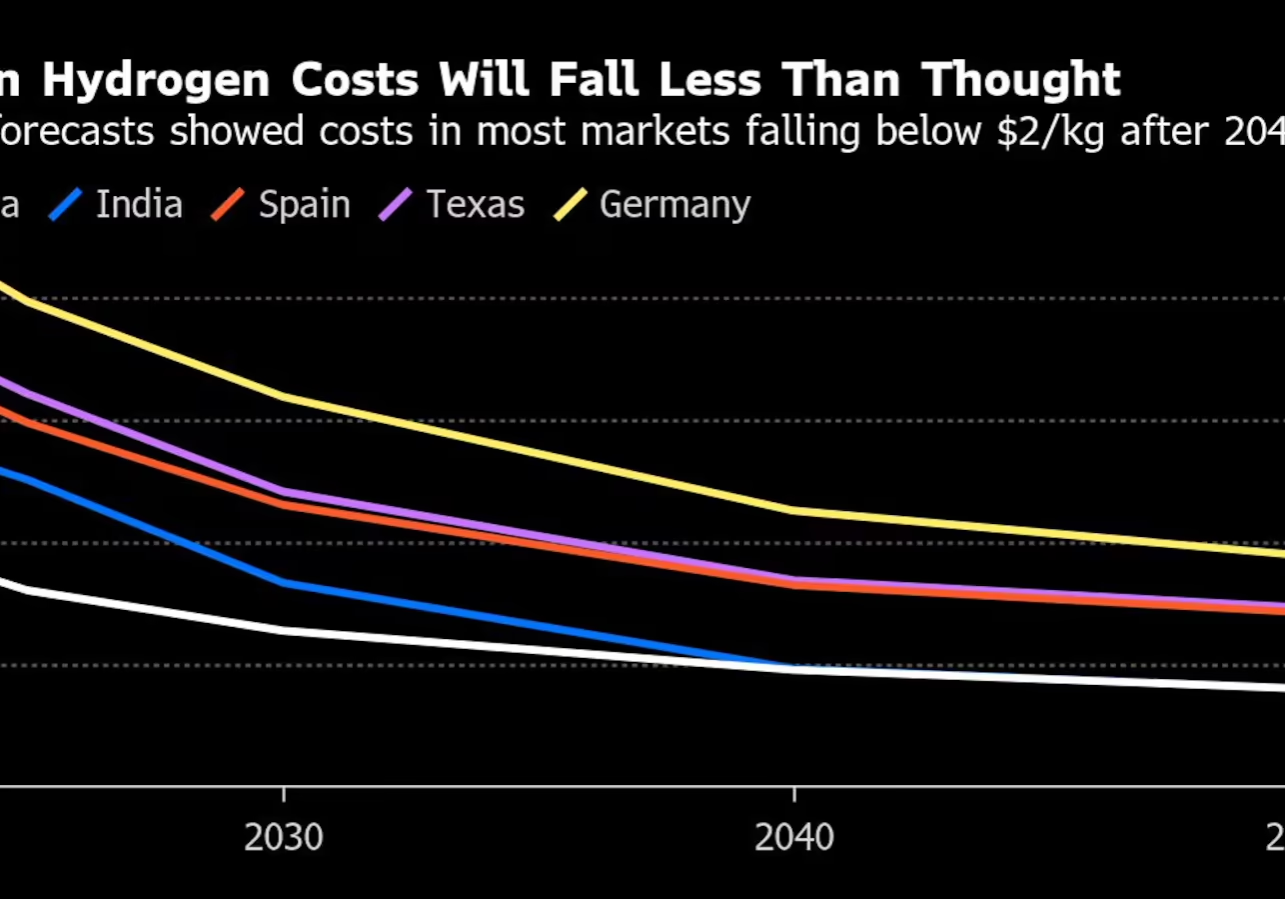
Where the Smart Climate Tech Venture Money Is Going in 2025
This year is shaping up to be a dramatic one for climate tech investors.
Donald Trump’s return to the White House is set to shift the US landscape, with the possible rollback of key provisions in the Inflation Reduction Act, Energy Department loans drying up and weaker regulations. Beyond the US, the prospect of more trade wars is scrambling the economy in ways that will determine which climate tech sectors to bet on.
Meanwhile, headwinds for hydrogen are throwing doubt on its viability, and artificial intelligence is now fully on investors’ radars.

The Regulator’s Dilemma, Part 3
Virtual power plants (VPPs) are poised to revolutionize the power sector by orchestrating distributed energy resources (DERs) — like smart thermostats, household appliances, solar panels, batteries, and electric vehicles — into real-time networks of dispatchable capacity. The opportunity is especially significant for advanced VPPs, which aggregate multiple device types, are fully automated and optimized by price signals, provide multiple reliable grid services, are compensated on a pay-for-performance basis, and serve as a true supply-side resource.
Advanced VPPs can offer grid operators significant value by reducing stress on generation, transmission and distribution infrastructure at lower cost than conventional solutions like large-scale batteries, peaker plants, or additional poles and wires.
Podcast
Hear more from our leadership on industry podcasts.